Plenary Keynote Session
(shared with co-located PepTalk)
Tuesday, January 19, 2027 | 4:15 – 5:25 pm
4:15 pm Welcome Remarks
Christina Lingham, Executive Director, Conferences and Fellow, Cambridge Healthtech Institute
4:20 pm Chairperson's Remarks
Kristine Deibler, PhD, Director, Molecular Artificial Intelligence, Novo Nordisk AS
4:25 pm Beyond the Funnel: Machine Learning-Powered Lab-in-the-Loop for Drug Discovery
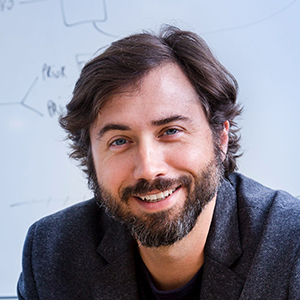 Richard A. Bonneau, PhD, Vice President, Drug Discovery, Prescient Design, a Genentech Co.
We will explore how new generative AI methods are uniquely positioned to accelerate and enhance drug discovery, illustrating our "lab in the loop" process for drug discovery and lead optimization. We will differentiate between design modules, where AI can enhance tools' power and accuracy, and process optimization problems, which involve connecting data and models to experimental design for faster and improved drug discovery. The discussion will cover powerful new design modules and multi-modal foundation models that span multiple drug modalities, with primarily focus on small-molecule and large-molecule drug discovery.
4:55 pm FIRESIDE CHAT: AI's Real Impact on Biologic Drug Discovery: The Honest Scorecard
PANEL MODERATOR:
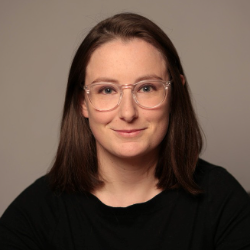 Kristine Deibler, PhD, Director, Molecular Artificial Intelligence, Novo Nordisk AS
AI promises faster discovery, better molecules, and smarter decisions, but how much measurable progress has actually been made? This candid discussion will separate genuine advances from inflated expectations and explore where AI is beginning to transform drug discovery:
- The honest scorecard: What has AI and machine learning delivered so far, and where have expectations outpaced results?
- From algorithms to assets: How AI is being applied across miniproteins, peptides, complex biologics, conditionally activated therapeutics, TCEs, and other modalities.
- The design to reality gap: Where experimental validation, translation, and manufacturability become the true bottlenecks.
- Proving the ROI: Which measures genuinely demonstrate impact on speed, quality, cost, and probability of success?
- Build, partner, or buy: How companies should assemble the capabilities, technology, and talent needed to compete.
- The next frontier: Where foundation models and agentic AI are already changing scientific workflows, and what must change culturally, structurally, and technically to unlock their full potential.
PANELISTS:
Richard A. Bonneau, PhD, Vice President, Drug Discovery, Prescient Design, a Genentech Co.
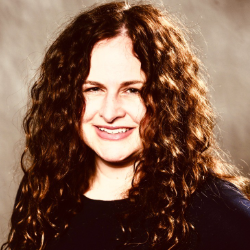 Vanessa Braunstein, Senior Director, TuneLab AI Drug Discovery Platform, Eli Lilly and Company
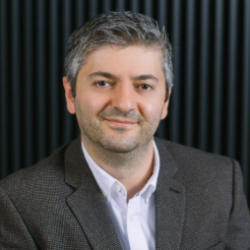 Gevorg Grigoryan, PhD, Co-Founder & CTO, Generate Biomedicines
Wednesday January 20, 2027 | 11:00 am – 1:05 pm
11:00 am Chairperson's Remarks
 Monica L. Fernandez-Quintero, PhD, Associate Professor, Department of Microbiology and Immunology, Novo Nordisk Foundation Initiative for Vaccines and Immunity (NIVI)
11:05 am Applying Frontier Models and LLMs to Biologic Discovery and Design
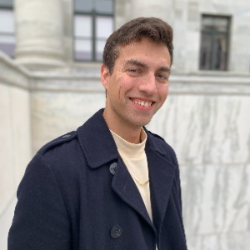 Samuel Stanton, PhD, Member, Technical Staff, Anthropic; Co-Founder, Coefficient Bio
Machine learning models have evolved from specialized prediction tools to general purpose assistants for the entire research lifecycle. LLMs have encyclopedic recall of documented public knowledge and competently execute well-defined mechanical workflows involving specialized tools. Frontier human-AI collaboration has shifted to distilling tacit knowledge, uncovering errors in theories and data, and improving observatory instrumentation. The result is not the complete automation of science, but a more ambitious vision of its future.
11:35 am When Proteins Become Code: Generative AI for Programmable Medicines
Gevorg Grigoryan, PhD, Co-Founder & CTO, Generate Biomedicines
Proteins are biology’s actuators, and generative AI is making them programmable. This talk explores why protein structure is learnable, how models can translate biological intent into novel molecules, and why models alone are insufficient. Programmable medicines require coupling generation with hypothesis-driven experimentation at scale and integrating drug development into a continuous learning system. Drawing on Generate Biomedicines’ experience, I will show how this approach is reaching the clinic.
12:05 pm Using AI for Protein Structure Modeling and Design
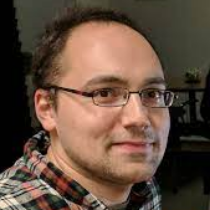 Sergey Ovchinnikov, PhD, Helen and Irwin Sizer Career Development Professor, Department of Biology, Massachusetts Institute of Technology (MIT)
In this talk, I'll describe the latest advancements in predicting protein structure and contacts using MSA pairformer and ProteinEBM. I'll show evidence that the first model can go beyond a single static structure, while the latter model can generalize outside of evolutionary space for variant effect prediction and design.
12:35 pm PANEL DISCUSSION: Q&A with Keynotes
PANEL MODERATOR:
Monica L. Fernandez-Quintero, PhD, Associate Professor, Department of Microbiology and Immunology, Novo Nordisk Foundation Initiative for Vaccines and Immunity (NIVI)
PANELISTS:
Gevorg Grigoryan, PhD, Co-Founder & CTO, Generate Biomedicines
Sergey Ovchinnikov, PhD, Helen and Irwin Sizer Career Development Professor, Department of Biology, Massachusetts Institute of Technology (MIT)
Samuel Stanton, PhD, Member, Technical Staff, Anthropic; Co-Founder, Coefficient Bio
Thursday, January 21, 2027 | 8:40 - 9:10 am
8:40 am AI vs Physics for Protein Engineering
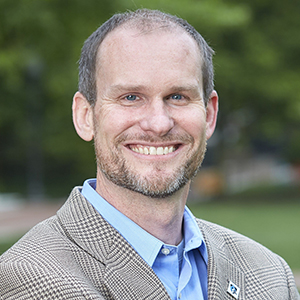 Jeffrey J. Gray, PhD, Professor, Chemical & Biomolecular Engineering, Johns Hopkins University; Director, Rosetta Commons
AI and physics are the foundations of two distinct classes of computational methods for protein engineering. While powerful, AI typically lacks interpretability and struggles to extend beyond training data. I will discuss the differences and complementarities of these approaches, sharing recent work extracting an energy function from AI methods, efforts toward data valuation and interpretability. We envision a future where AI methods can be combined with physics for powerful and interpretable biomolecular engineering.
Keynote Speaker Biographies
Richard A. Bonneau, PhD, Vice President, Drug Discovery, Prescient Design, a Genentech Co.
Richard Bonneau is a computational biologist and data scientist who now leads Computational Drug Discovery in the Computational Sciences division at Genentech. This effort centers on pioneering new methods for combining machine learning and molecular modeling to power drug discovery. His past research spans multiple levels of biological structure and includes: learning biological networks, designing protein, biomimetic chemical biology and exploring social networks. He received his PhD at the University of Washington, Seattle, studying under Dr. David Baker, where he pioneered new methods to predict biomolecular structures. His postdoctoral training was completed at the Institute for Systems Biology, working with Leroy Hood. Dr. Bonneau has been a professor at NYU jointly appointed in the Computer Science and Biology departments. He was a founding member or co-founder of the RosettaCommons, The Center for Data Science at NYU, the Simons Center for Data Analysis (which evolved into the Flatiron institute) and recently co-founded Prescient Design (acquired by Genentech). Dr. Bonneau is excited to be part of Genentech’s effort to revolutionize molecular design and drug discovery with computational advances.
Vanessa Braunstein, Senior Director, TuneLab AI Drug Discovery Platform, Eli Lilly and Company
Vanessa has spent her academic and business career exclusively in life sciences & healthcare. She has worked at large pharma/biotech/tech companies such as Sanofi, Abbott, and NVIDIA and start-ups such as Ingenuity Systems (acquired by Qiagen) and Fabric Genomics (acquired by GeneDx). Vanessa is currently Senior Director at Eli Lilly focused on the Lilly TuneLab AI/ML Platform for accelerating drug discovery. Vanessa began her career in academics and clinical research in molecular and cell biology and public health at UC Berkeley and UCSF and then transitioned to roles building new products, strategic alliances, commercial ecosystem growth in AI and life sciences.
Kristine Deibler, PhD, Director, Molecular Artificial Intelligence, Novo Nordisk AS
Kris is the Director of Molecular AI in AI and Digital Innovation at Novo Nordisk. She is leading a global area focused on the development and implementation of AI/ML methods for therapeutic design and optimization across modalities. Molecular AI is actively developing Novo Nordisk–tailored foundation models to enhance molecular representation, predict biophysical properties linked to developability and potency, and develop advanced generative AI methods in molecular design and optimization. Before joining Novo Nordisk, Kris trained as an organic chemist and earned her Ph.D. in Organic Chemistry from Northwestern University. She pivoted her research focus to computational molecular design during her postdoctoral fellowship with David Baker, where she specialized in designing peptidomimetic GPCR agonists. During this time, she developed innovative computational methods for designing macrocyclic peptides that incorporate non-canonical amino acids. Kris is not only passionate about developing innovative AI methods but is even more driven by the pursuit of discovering impactful therapeutics.
Monica L. Fernandez-Quintero, PhD, Associate Professor, Department of Microbiology and Immunology, Novo Nordisk Foundation Initiative for Vaccines and Immunity (NIVI)
Monica Fernández-Quintero studied Theoretical Chemistry at the University of Innsbruck. During her PhD she demonstrated how molecular dynamics simulations can improve the structure prediction of proteins, i.e., antibodies and ion channels. Already since her Bachelor thesis 2015 Monica is working on the dynamics of antibodies and graduated in 2020. She already authored several papers, gave talks, and presented posters on international conferences featuring various aspects of antibody and T-cell receptor dynamics. Since 2023 she joined the lab of Prof. Andrew Ward, combining structural biology with physics-based machine learning approaches to characterise protein-protein binding interfaces, facilitating the design of antibodies and de-novo proteins.
Jeffrey J. Gray, PhD, Professor, Chemical & Biomolecular Engineering, Johns Hopkins University; Director, Rosetta Commons
Jeffrey J. Gray is Professor of Chemical and Biomolecular Engineering at the Johns Hopkins University, with joint appointments in the Program in Molecular Biophysics and the Sidney Kimmel Comprehensive Cancer Center (Oncology). He earned his B.S.E. in chemical engineering at the University of Michigan and his Ph.D. in chemical engineering at the University of Texas at Austin, and he completed postdoctoral training at the University of Washington. His research focuses on computational protein structure prediction and design, particularly protein-protein docking, antibody engineering, membrane proteins, protein-carbohydrate interactions, and deep learning. Gray is a Fellow of the AIMBE, and his awards include the AIChE’s David Himmelblau Award, the Beckman Young Investigator Award, the Johns Hopkins Alumni Association Excellence in Teaching Award, and the Capers and Marion McDonald Award for Excellence in Mentoring and Advising. He serves on the editorial board of Proteins, and he is the Co-Director of the Rosetta Commons. He is also the Director of the NSF-supported Rosetta Commons Summer Intern (REU) Program and the Rosetta Commons Post-Baccalaureate Program. At Johns Hopkins he is a member of the Diversity Leadership Council and a co-founder of the Homewood Council on Inclusive Excellence, through which he works to create more inclusive and equitable research environments.
Gevorg Grigoryan, PhD, Co-Founder & CTO, Generate Biomedicines
Since co-founding Generate:Biomedicines, Gevorg Grigoryan, PhD, has served as Chief Technology Officer, playing a foundational role in establishing the company’s scientific vision and technological backbone. As an architect of The Generate Platform™, Gevorg has led the integration of machine learning and protein science to enable the on-demand generation of novel therapeutics across a wide range of biologic modalities. Under his scientific leadership, Generate:Biomedicines has advanced a growing pipeline of preclinical programs and clinical assets, all rooted in a generative approach to biology. Prior to founding Generate:Biomedicines, Gevorg was a tenured professor at Dartmouth College, where his interdisciplinary research across computer science, chemistry, biology, and physics contributed major insights into the principles of protein structure and function. His academic work was instrumental in demonstrating the feasibility of generative design and continues to inform the scientific direction of the company. Gevorg has authored more than 50 peer-reviewed publications in top-tier journals including Nature, Science, and PNAS. His research has earned recognition from the Alfred P. Sloan Foundation, the National Institutes of Health, the National Science Foundation, and the American Cancer Society. He holds a PhD from the Massachusetts Institute of Technology and dual bachelor’s degrees in Biochemistry and Computer Science. In his role at Generate:Biomedicines, Gevorg remains focused on driving innovation at the intersection of computation and biology and enjoys working with brilliant scientists on some of the toughest challenges in molecular and therapeutic science.
Sergey Ovchinnikov, PhD, Helen and Irwin Sizer Career Development Professor, Department of Biology, Massachusetts Institute of Technology (MIT)
Sergey Ovchinnikov received his B.S. in Micro/Molecular Biology from Portland State University and a Ph.D in Molecular and Cellular Biology from the University of Washington in Seattle. In the lab of Dr. David Baker, Sergey worked on algorithms for protein structure determination using evolutionary information. Currently, Sergey is a John Harvard Distinguished Science Fellow at Harvard University. The Ovchinnikov Lab is interesting in developing a unified statistical model of protein evolution to better understand phylogenetics, protein folding, origins of life/multicellularity, and to mine metagenomic “dark matter” sequences to discover new protein families, functions, and protein-protein interactions.
Samuel Stanton, PhD, Member, Technical Staff, Anthropic; Co-Founder, Coefficient Bio
I am interested in foundational machine learning research with applications that promote human flourishing, particularly the life sciences. I wish to understand the best way to build self-sustaining intelligent systems that automatically collect and incorporate the necessary information to solve difficult optimization problems, such as black-box optimization and adaptive control problems. Applications of my work include lab-in-the-loop systems for antibody engineering and therapeutic pipeline portfolio strategy.